Monthly Archives: October, 2014

Department of Aging wrap-up for Friday, October 24, 2014

PA department of aging logo

Each week the Secretary of Pennsylvania Department of Aging, Brian M. Duke, releases a Friday newsletter with information relevant to activities, issues and events for older Pennsylvanians and persons with disabilities across the Commonwealth.

Click here to read the October 24 newsletter.

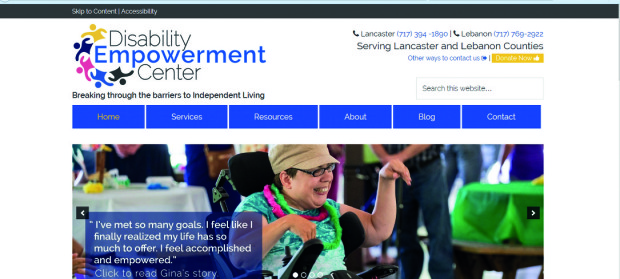
Disability Empowerment Center reveals new brand; revamped Website

dec site

The Disability Empowerment Center (DEC) introduced its new logo and Website today at an open house at the Lancaster office. Click on the graphic above to investigate DEC’s new Website.

“A Brief Mindfulness-based Preventive Intervention Improves Self-Control and Neuroplasticity: Brain Mechanisms and Applications to Mental Disorders”

NIH logo alt med

The NCCAM Integrative Medicine Research Lecture Series provides overviews of the current state of research and practice involving complementary and alternative medicine practices and approaches, and explores perspectives on the emerging discipline of integrative medicine.

Topic: A Brief Mindfulness-based Preventive Intervention Improves Self-Control and Neuroplasticity: Brain Mechanisms and Applications to Mental Disorders
Date: October 20, 2014 - 10:00a.m. ET
Speaker: Yi-Yuan Tang, Ph.D.

“Resilient Communities” report has recommendations for “empowering older adults in disasters and daily life”

This report has reviews the impact of disaster incidents “that are never going to happen” on older adults and vulnerable populations … and it sets recommendations to improve to a better state of preparedness.

“In more resilient (communities), neighbors talk to and check on one another. Institutions across sectors work together and are known and welcoming to all community members. And older people are seen as problem solvers rather than problems to be solved.”

These are just some of the recommendations in this report, “Resilient Communities: Empowering Older Adults in Disasters and Daily Life.” While the report specifically is directed to older adults in the New York City metro, the lessons learned and take-away points are applicable anywhere.

  • Older adults in underserved neighborhoods should be trained to identify and link vulnerable people with community assets (e.g., health care, social services, benefits, food) under routine conditions and during emergencies.
  • Older adults and informal caregivers should be pro­vided with access to and training on multiple forms of communication and technology.
  • Landlords with large concentrations of older adults and mobility-impaired people should be supported in developing plans to meet the needs of these pop­ulations in disasters.
  • Employees of city services, local businesses, cultural institutions, and others who routinely interact with older adults should be trained in identifying and pro­viding appropriate local health and human service referrals to those who may be in need of assistance before, during, after, and outside of an emergency.
  • Communities should be assisted in organizing Community Resilience Hubs housed at the most appropriate and accessible institutions within each neighborhood to facilitate communal planning and multi-sector partnerships, and to serve as a central repository for information and supplies during an emergency.
  • Providers of essential services to older adults should develop contingency plans to ensure the needs of their patients and clients will be met during disasters and emergencies. The communities should extend MOUs and set funding policies in advance to enable providers to expand their reach during disasters.
  • Systematically co-locate and coordinate mental health, spiritual care, and psychological first aid with non-stigmatized disaster response and recov­ery services.
  • Academia, city agencies, and community-based organizations should develop and implement ap­propriate metrics to indicate how vulnerable pop­ulations are affected by and assisted in disasters.

resilient communities

“Out and Visible: The Experiences and Attitudes of Lesbian, Gay, Bisexual and Transgender Older Adults, Ages 45-75″

“Out and Visible: The Experiences and Attitudes of Lesbian, Gay, Bisexual and Transgender Older Adults, Ages 45-75″ examines the values, needs, wants and lifestyle preferences of LGBT older people. This study explores the aging realities of LGBT people, as well as their fears, beliefs, behaviors and aspirations in areas such as healthcare, finance and retirement, support systems, housing and sources of information. The report is based on a national survey of 1,857 LGBT people and 519 non-LGBT people, conducted in March 2014 by Harris Poll on behalf of SAGE.

out and visible

“A Beautiful Backyard Cottage for Mom and Dad” - nextavenue

Cool multigenerational options from developers and architects

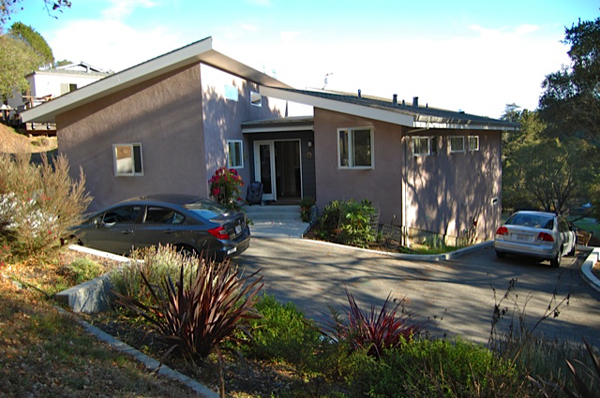
1 A Beautiful Backyard Cottage for Mom and Dad Embed Soquel DSC_0700The Gallants built this 1,200-square-foot, energy-efficient house adjacent to their son’s existing home. Photo courtesy of Frank Gallant

by Beth Baker

Editor’s note: This article is part of a year-long project about aging well, planning for the changes aging brings and shaping how society thinks about aging.

“First there were in-law apartments. Then came ‘Granny pods’ — backyard structures tricked out with medical devices for frail elders who might otherwise be in a nursing home. Now, boomers have more attractive living options for sharing households, whether it’s to provide housing for their parents or to move in with their grown children and grandkids.

“The idea of multigenerational housing is as old as humanity. But mostly that has entailed sharing the same living space. According to W. Andrew Achenbaum, professor of social work at University of Houston and a historian of aging, one of the earliest examples of families living in separate spaces on the same property is the “dowager house” in England, where the widow of the estate owner would move into a smaller abode on the grounds.

“‘In the U.S., I think the Amish deserve the credit on a more modest scale,’ Achenbaum said in an email. Amish elders typically pass the family farm on to the next generation and move from the main house to the adjacent ‘grandfather house.’

“‘This allows for independence without sacrificing intergenerational family involvement,’ wrote John A. Hostetler in his book Amish Society.”

Read this next avenue article in its entirety.

OVR asks for your input in a Comprehensive Statewide Needs Assessment (CSNA)

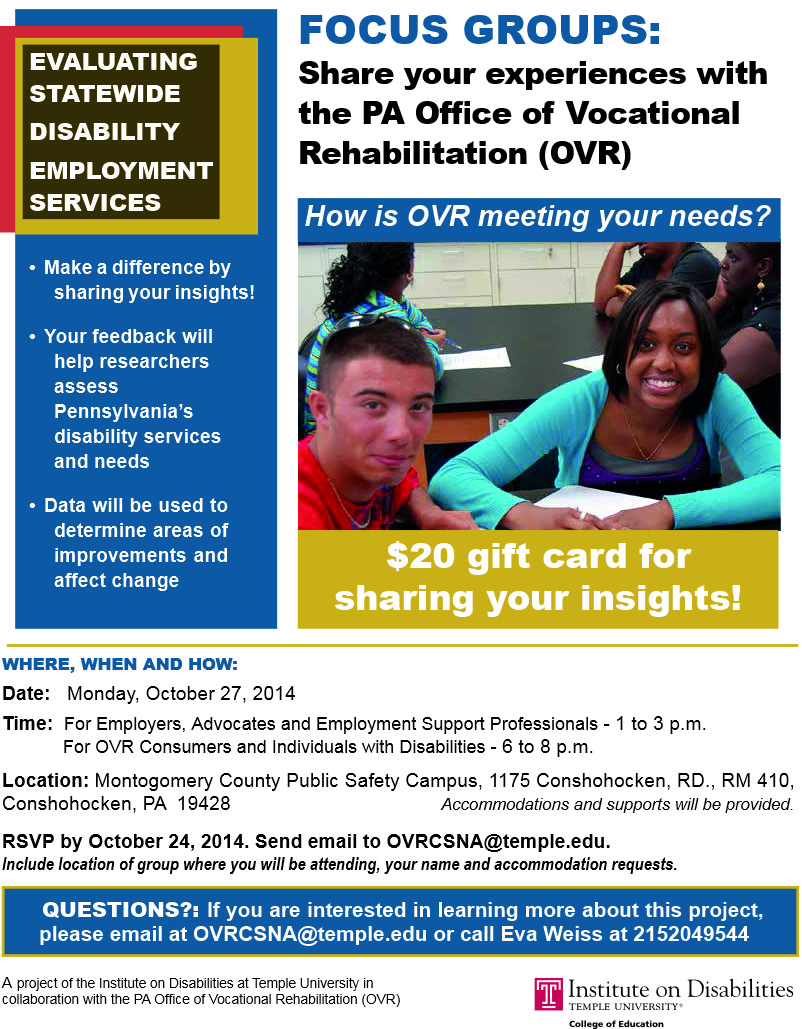
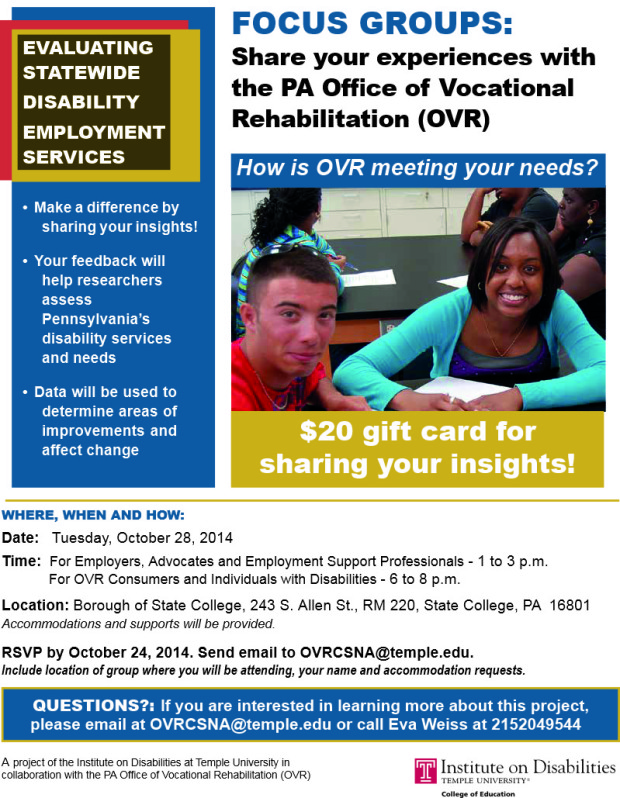
The Office of Vocational Rehabilitation (OVR) is conducting a Comprehensive Statewide Needs Assessment (CSNA) designed to meet and satisfy the State Plan requirements in the Rehabilitation Act of 1973, as amended. This project is being conducted in cooperation with the Pennsylvania Rehabilitation Council and with the assistance of Temple University’s Institute on Disabilities. OVR wants all of its stakeholders to offer insights, feedback and ideas as to how OVR and allied organizations can meet the needs of individuals with disabilities as well as how to better reach unserved and underserved individuals with disabilities.

OVR consumers and individuals with disabilities

  1. Share your insights and experiences at a focus group scheduled from 6:00 – 8:00 PM (see one of the graphics below for a location near you). A $20 gift card will be offered to those who participate in a focus group.
  2. Complete this brief survey by December 10, 2014: www.surveymonkey.com/s/OVRCSNA1

Advocates, employers, community service providers, vendors, and other interested individuals

  1. Share your insights and experiences at a focus group scheduled from 1:00 – 3:00 PM (see one of the graphics below for a location near you). A $20 gift card will be offered to those who participate in a focus group.
  2. Complete this brief survey December 10, 2014: www.surveymonkey.com/s/OVRCSNA2

ovr focus groups


ovr survey state college

“NCOA Leads First-Ever National Falls Prevention Resource Center”

“$5 million in new grants will help older adults nationwide prevent life-threatening falls”

Washington, DC – The National Council on Aging (NCOA) was awarded a grant from the Administration for Community Living (ACL) to establish and lead the country’s first National Falls Prevention Resource Center to reach thousands of older adults and their families with information on how to prevent falls.

In total, the ACL awarded nearly $5 million to 14 state and local grantees and NCOA to support the implementation and dissemination of evidence-based falls prevention programs and strategies across the nation.

Falls are the leading cause of both fatal and nonfatal injuries for people 65 and older. One in three older adults—more than 14 million—falls every year, incurring over $30 billion in medical costs. These falls are often avoidable, but access to proven prevention programs is currently limited.

As the National Falls Prevention Resource Center, NCOA will:

  • Provide expert guidance, leadership, and resources for consumers and professionals
  • Serve as a national clearinghouse for best practices for implementing evidence-based falls prevention programs
  • Establish national leadership and technical assistance structures to scale and sustain successful programs

For more than nine years, NCOA’s Falls Free® Initiative has been the national leader in raising awareness about older adult falls and how to prevent them. Today, more than 43 states and 70 national organizations, professional associations, and federal agencies work collaboratively through the Initiative to spread evidence-based falls prevention programs and strategies.

“Falls are not an inevitable part of growing older,” said James Firman, NCOA President and CEO. “The state and local grantees, working closely with the Resource Center, will improve access to proven programs and educate thousands of older Americans and their families about simple steps to stay safe as they age.”

In addition to NCOA, 10 domestic and private nonprofit entities and four tribal organizations received two-year grants. Awardees will work in collaboration with the Resource Center to implement or expand evidence-based falls prevention programs.

The grants are part of falls prevention funding allocated from the Prevention and Public Health Fund (PPHF). Senate Appropriations Chairwoman Barbara Mikulski (D-MD) and Labor, Health and Human Services, and Education Subcommittee Chairman Tom Harkin (D-IA) provided support and leadership for the funding. The PPHF was established under the Affordable Care Act as the first mandatory funding stream dedicated to improving the nation’s public health.

On Sept. 23, 48 states and numerous community organizations celebrated the 7th Annual Falls Prevention Awareness Day, which the Falls Free® Initiative sponsors each year on the first day of fall. This year’s event highlighted the important roles professionals, caregivers, and family members play in raising awareness and helping older adults have a Strong Today – Falls Free® Tomorrow.

To learn more about Falls Prevention Awareness Day or the Falls Free® Initiative, visit www.ncoa.org/FallsPrevention.

A complete list of ACL Evidence-Based Falls Prevention grantees can be found here.

SOURCE: news release

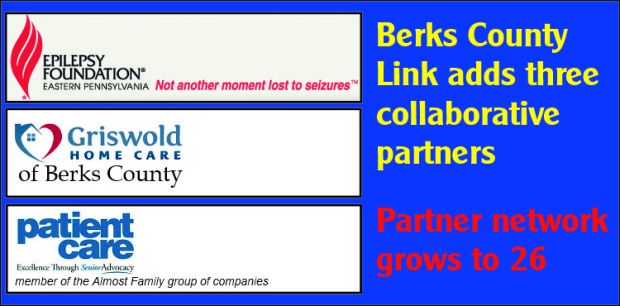
Three more county resource providers align with the Berks County Link partner network

26 partners


Three more Berks County resource provider agencies/entities/organizations have become collaborative partners with the Pennsylvania Link to Aging and Disability Resources in the Berks County partners’ network.

The most recent partners are:

These collaborative partners join a growing network of Berks County agencies/entities/organizations that provide information and resources for persons aged 60 and over; persons with a disability; veterans; family members and caregivers.

If you would like more information about how to become a collaborative partner (there’s no cost) or to align with any county partners’ network in the Berks-Lancaster-Lebanon Service Area, contact Berks County Coordinator, Ann Barlet at 610.478.6500, ext. 5523.

Or text or call Brian Long, Berks-Lancaster-Lebanon Service Area Lead Coordinator at 717.380.9714 or email: blllink@mail.com

“Men Filling Memory Care Communities 14% Faster Than Women” - Senior Housing News

“Men are moving into memory care communities at a much quicker pace than women, as their move-ins increase 14% faster than their female counterparts, according to A Place for Mom (APFM) data.

“The senior living referral service surveyed its data on men seeking senior care from July 1, 2011, through June 30, 2014, and found that male move-ins to memory care communities are gradually catching up to women.

“‘While women continue to be diagnosed with Alzheimer’s Disease at a higher rate, we are seeing a significant increase in men seeking memory care with the number of our male residents doubling in the past 18 months,’ said Megan Carnarius, registered nurse and executive director of Balfour Cherrywood Village, an Alzheimer’s and memory care community in Louisville, Colo.”

Read the Senior Housing News article in its entirety here.

NOTE: While most people use the word dementia to describe “group of symptoms affecting thinking and social abilities severely enough to interfere with daily functioning,” it’s been observed that the word dementia is being supplanted by the phrase “related disorders.”

The Alzheimer’s Association says “Dementia is not a specific disease. It’s an overall term that describes a wide range of symptoms associated with a decline in memory or other thinking skills severe enough to reduce a person’s ability to perform everyday activities. Alzheimer’s disease accounts for 60 to 80 percent of cases.”

PA alz plan

Pennslyvania’s State plan for Alzheimer’s Disease and Related Disorders states, “The committee discussed the terms dementia and ADRD. In recognition of the evolution in diagnostic terminology used by clinicians and other care providers, the term ADRD encompasses the wide range of disorders associated with cognitive and functional impairment, and was thought by many members of the committee to be more respectful and less stigmatizing than the word dementia. At the same time, the committee recognized that limited use of the word dementia is appropriate in some cases and that raising awareness and understanding of these disorders is the only way to truly combat stigma.”


Follow

Get every new post delivered to your Inbox.

Join 77 other followers